
Submitted by nsscadmin on
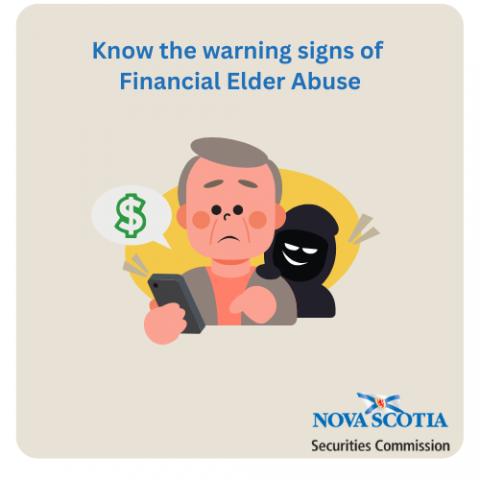
If you live in Nova Scotia, there’s a good chance you have someone in your life, a family member or friend, who is elderly. Nearly 25% of the province’s population is 65 years of age or older, and that number continues to rise. More older people, unfortunately, means more reported instances, and of course, unreported instances of financial elder abuse.
Financial elder abuse is the use of someone’s money without their permission or in a fraudulent manner. Did you know financial elder abuse is the most common form of elder abuse? Financial elder abuse can take many different forms, but is most often perpetrated by family, friends, and other people close to the victim.
If you have an older person in your life, you need to know the warning signs that they may be a victim . Here are some common warning signs of financial elder abuse to watch out for:
Mail and unpaid bills are piling up. A victim of financial elder abuse may not have enough money to cover their bills and expenses.
They are fearful, distressed, or depressed. A victim of financial elder abuse may lose their trust in people or fall into a depression over what has happened to them. They also may not be able to live their life as they once did due to a lack of funds.
They were asked to sign blank documents by an adviser, family member, friend. If someone is asking an older person to sign a blank document they should ask, why is it blank? Is that person going to fill it in and take advantage of them? Could they use that blank form to steal their money or direct money to places they don’t want it to go? Blank documents should never be signed.
They have unopened account statements or missing account statements or investment documentation. If account statements or other investment documentation is missing or being withheld it is a major red flag for fraud.
They don’t understand or know about financial decisions that someone else is making for them. Many older people are taken advantage of because they don’t understand or know about financial decisions being made for them. If you believe this is the case, talk to someone you trust to try and find some answers.
Family members or friends are pressuring them to give them money. Older adults can often be pressured, sometimes to the extreme, by family or friends to loan or even outright give them money.
Someone has accessed their account, and money seems to be missing. This is a clear- cut example of financial elder abuse. If this has occurred or continues to happen, it needs to be reported to law enforcement immediately and be investigated.
If you believe someone is the victim of financial elder abuse, get help right away. Contact their financial institutions and advisers to check accounts and obtain a history of recent transactions and balances. Review everything and make a note of anything you believe is suspect or may have been done without authorization. If you think something illegal may have occurred, contact your securities regulator and your local police.