
Submitted by nsscadmin on
Nova Scotia Capital Markets 2026 (NSCM2026) was held in the Compass Room of Casino Nova Scota on Thursday, April 23. This bi-annual event delivers insightful discussions on the latest trends, challenges and developments within Nova Scotia capital markets that are of interest to issuers, investors, market participants, academics, professionals and regulators.
NSCM2026 began with a welcome and land acknowledgement from Valerie Seager, Chair of the Nova Scotia Securities Commission. Valerie also outlined the day’s schedule and topics before introducing the keynote speaker, the Honourable John Lohnr, Minster of Finance and Treasury Board,
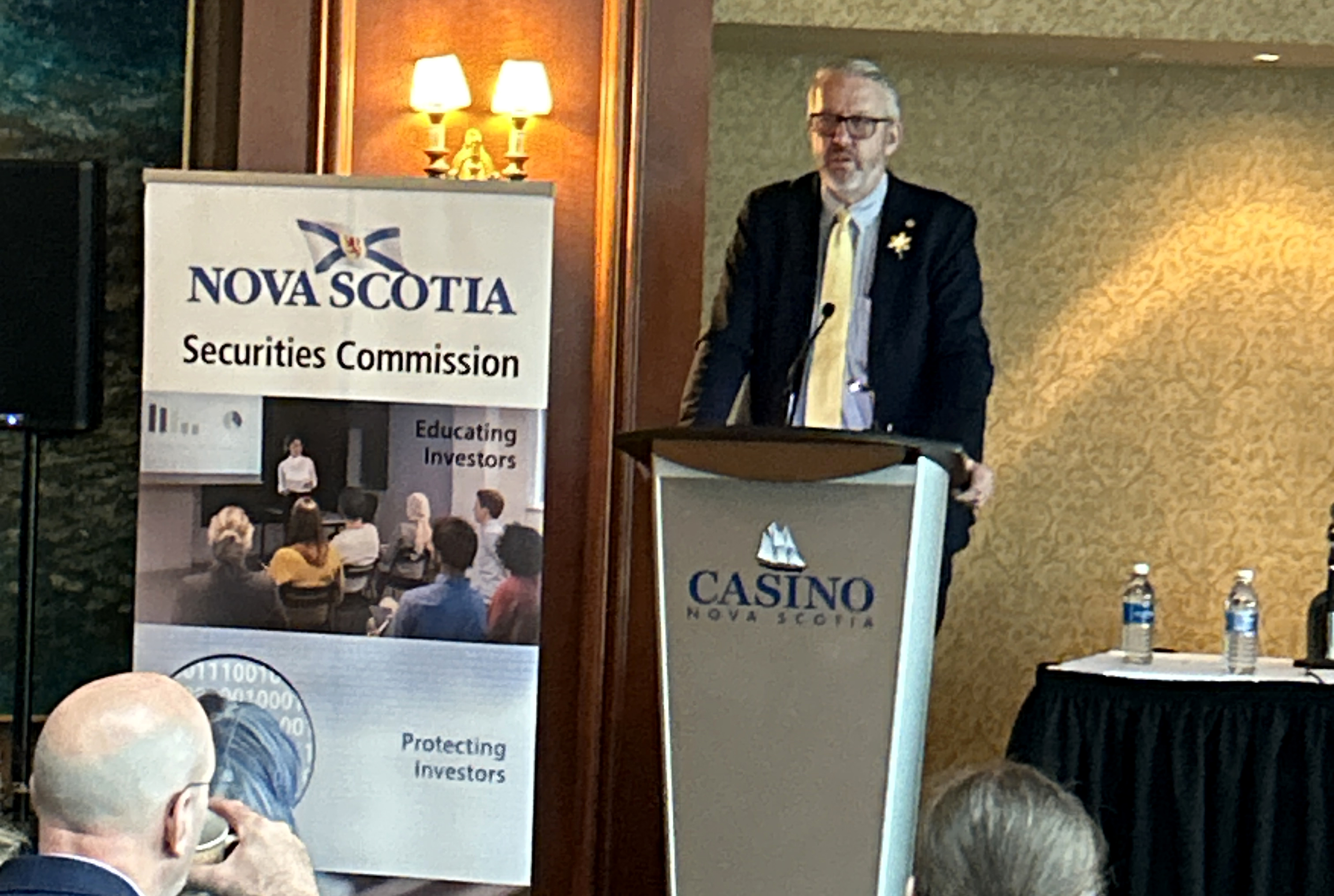
Minister Lohr’ keynote address touched on the resiliency of Nova Scotians and the Nova Scotia economy while also highlighting the economic supports for Nova Scotia business and economic markets included in the most recent budget.
Two areas Minister Lohr specifically highlighted were funding enhancements made to housing and defense spending. As a key piece of Canada’s naval defense, Nova Scotia will see an increase in defense spending and focus, including a recent $2 billion investment in the region’s defense announced by the Federal government.
Minister Lohr also spoke of the challenges facing the province, topped by economic uncertainly, most coming from external sources.
Despite these challenges, Minister Lohr concluded his address by stating, "I am optimistic about our future, and I believe we are building a bright future in our province.”
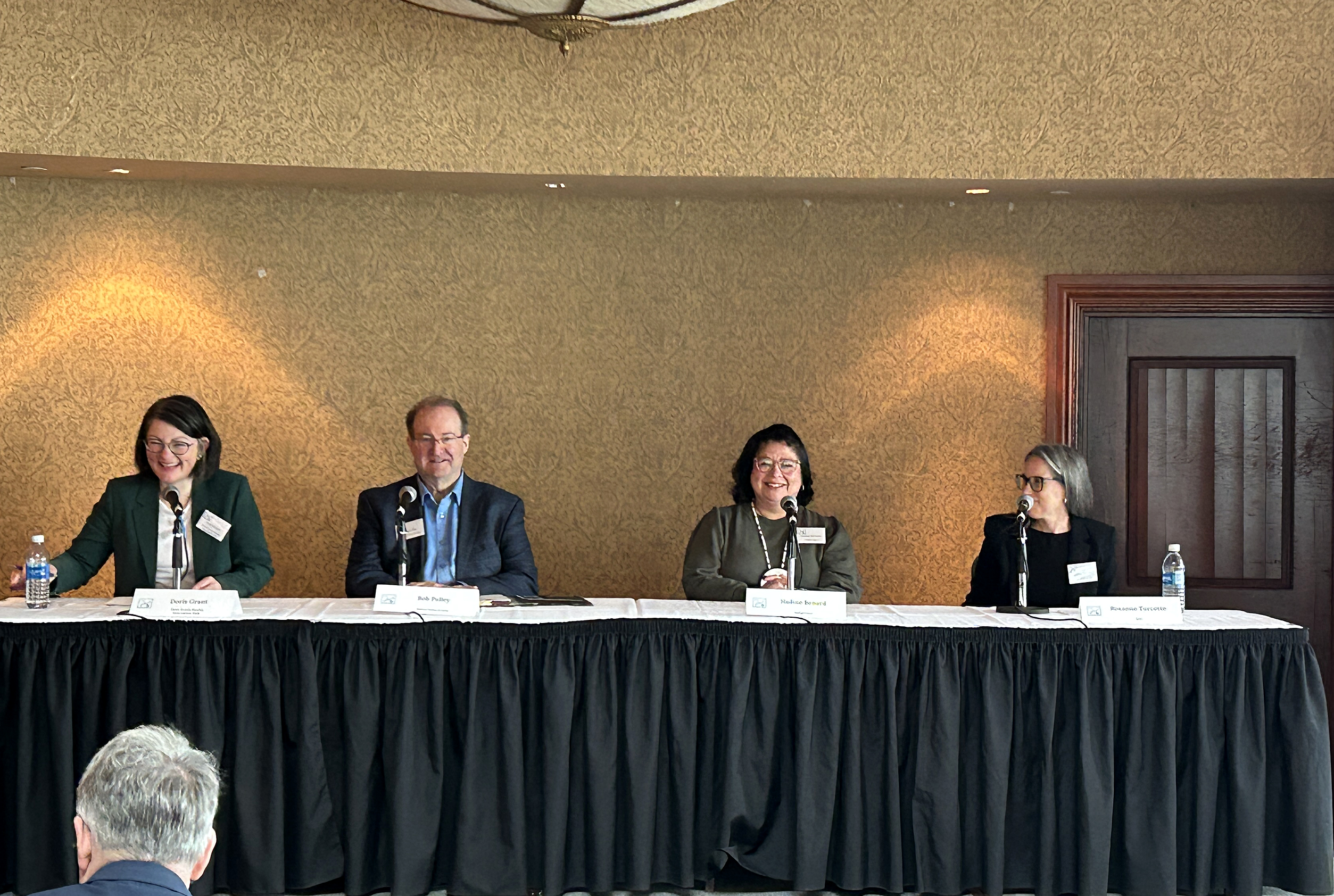
The first panel discussion at NSCM2026 was Private Returns: Aligning Government Programs with Market Outcomes. It was moderated by Doris Grant, the Managing Director of the Nova Scotia Health Innovation Hub and CEO of Life Sciences Nova Scotia. The panel featured:
Nadine Bernard, Indigevisor
Bob Pelley, Invest Nova Scotia
Roxanne Turcotte, Business Development Bank of Canada (BDC)
The themes discussed on the panel included some of the key funding programs available to facilitate the growth of Nova Scotia enterprises, and how engagement with Indigenous communities can facilitate capital-raising.
Roxanne got the discussion going by describing how BDC tries to bridge the gap to groups and organizations that sometimes get left out of the capital discussion. “We serve the underserved, and provide capital to market gaps. Performance in time will provide sustainable growth for the sectors.”
Nadine, highlighted the importance and often difficulty of getting indigenous groups to the table. “We know who we are and how we want to participate in the economy. Presence is important. We want to be a participant in the economy, but on our own terms.” Nadine also noted the difficulties Indigenous groups have in getting investors interested in their projects: “They’ve declared us underserved, but what we really are is undervalued”.
Bob highlighted the mission of Invest Nova Scotia to support Nova Scotia business growth. He highlighted some of their programs while also pointing out that Invest Nova Scotia continually is “looking for business investments with high growth and export potential. Companies that are solving big problems.” Invest Nova Scotia also has a goal to try to put their money into areas the market typically does not serve.
Bob also continued the minister’s focus on defense spending in the region. Invest Nova Scotia has recently hired a Sheldon Gillis (a former Royal Canadian Navy Captain with 25 years of experience) as Managing Director, Defence to help Nova Scotia manage and compete for defense spending dollars and projects.
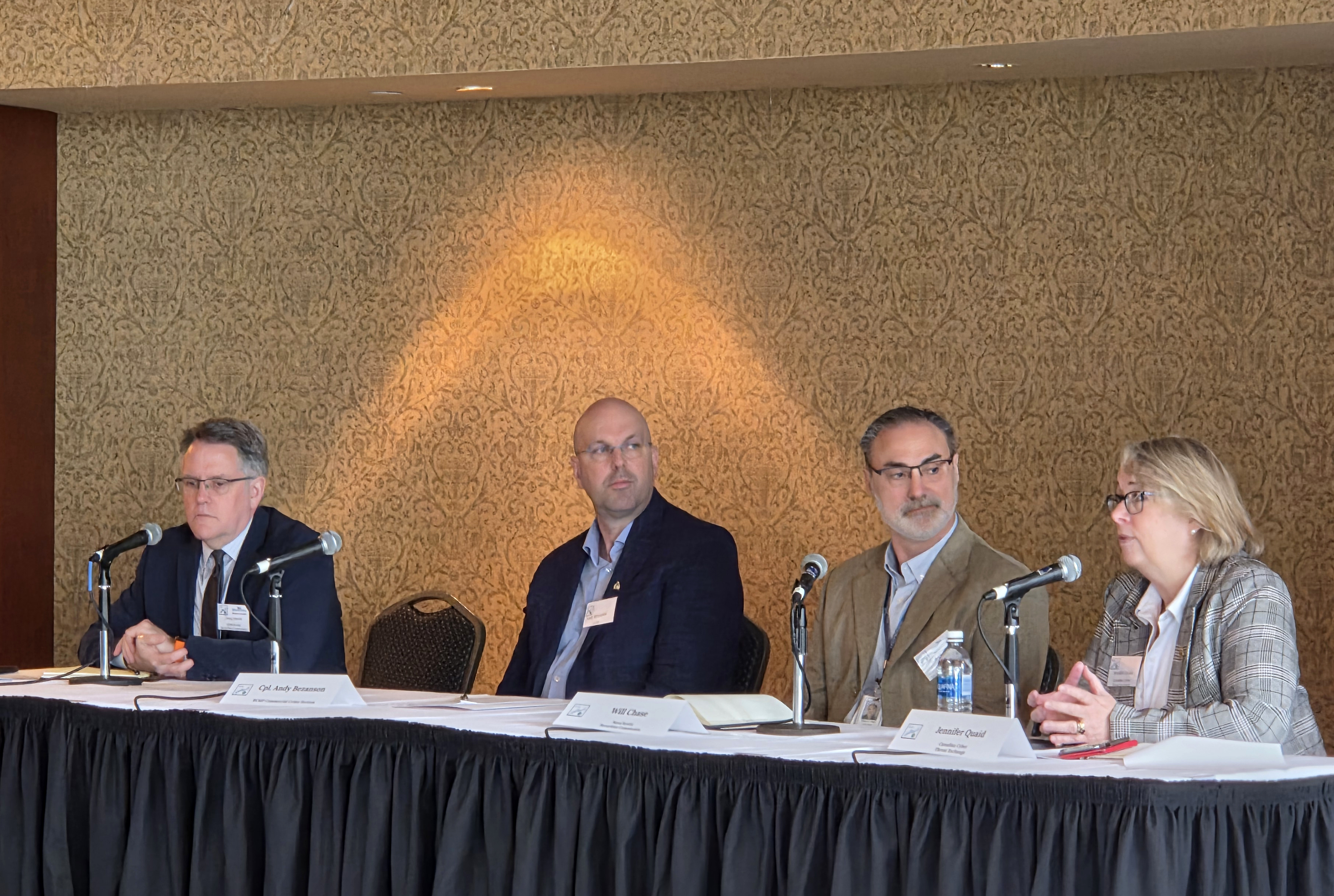
The second panel was Disruption: Preventing Investor Harms. It was moderated by Doug Harris, General Counsel of the Commission, and featured a diverse panel of fraud experts:
Andy Bezanson – RCMP
Will Chase – Nova Scotia Securities Commission
Jennifer Quaid – Canadian Cyber Threat Exchange/Canadian Anti-Scam Coalition
The panel discussion focused on the challenges law enforcement and regulators face in tackling rising investment fraud numbers, and some of the approaches and tools that securities regulators and others are using to focus on preventing investor harm before it occurs.
Andy spoke about limited resources being a major challenge for the RCMP, especially in rural detachments where there often are no commercial crime experts. The RCMP has especially seen an increase in reported losses to pig butchering scams and social media investment solicitations. He noted that “The quality of scams is getting much better. It makes fake companies and fake investments much harder to spot.”
Jennifer discussed the recent creation and development of the Canadian Anti-Scam Coalition, which has brought together firms from all parts of a scam’s “life cycle”, including financial, telecom and technology sectors. She observed that “We want to do more than disrupt, we want to prevent and you can’t do that in a silo.”
Jennifer also touched on the importance of early fraud education, which needs to be delivered at a young age, to protect and inform young people before the fraudsters begin targeting them.
Jennifer argued that “We should be teaching digital health at all levels. Once one of these gets in their hands (holding up her smart phone) we need to teach them to use it safely and responsibly.”
Will echoed Andy’s sentiment that advancing technology is making it harder to detect fraud and leading to more victimization. He observed that “These AI-generated videos look so real, and it’s providing legitimacy that isn’t earned.”
Technological advancement is also paving the way to prevention, as new technology has allowed regulators to proactively take fraudulent sites down.
Will also delivered a poignant and important message around fraud by stating, “every one dollar lost to fraud is also lost to legitimate investment in Nova Scotia.”
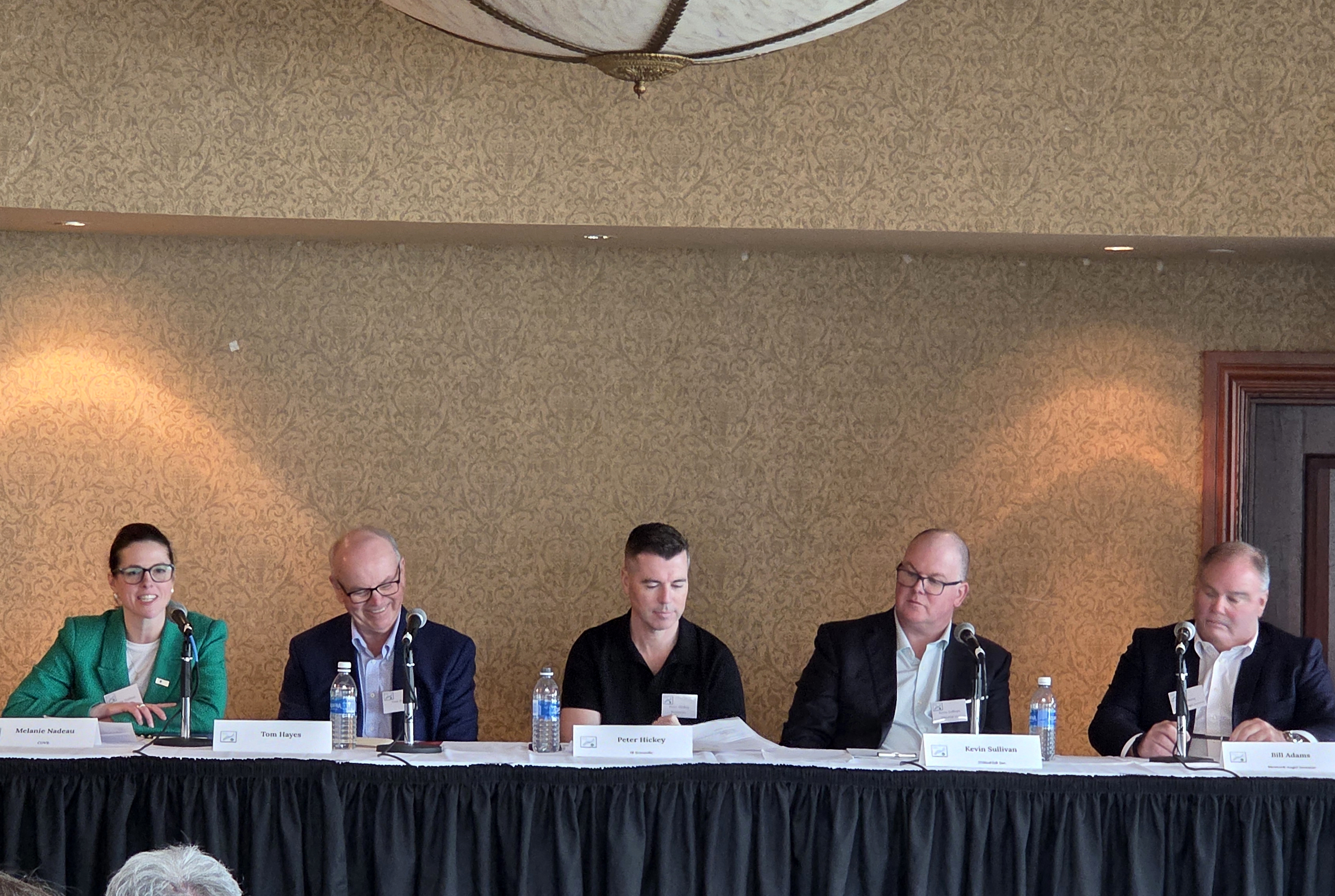
The final panel of the day was Venture Capital as a Catalyst for Regional Growth. It was moderated by COVE CEO Melanie Nadeau and featured:
Tom Hayes
Peter Hickey, IR Scientfic
Kevin Sullivan, 3DBioFibR Inc.
Bill Adams, Angel investor
This panel looked at the critical role that venture capital (VC) plays by investing in start-up and early-stage companies to create employment and growth in the local economy, and how enterprises can best attract venture capital investment.
Tom began the panel discussion with a brief overview of VC growth in Atlantic Canada. This decade-long synopsis showed how VC has come a long way in our region
Bill gave a strong overview of his ground up creation of STI Technologies Limited and the capital raising and VC lessons he learned along the way. He also pointed out that getting s business started in this region, or any region for that matter is not easy, no matter how good your idea.
Bill noted that “There are so many great ideas in this region, but so many businesses lack the runway and the bandwidth to get off the ground. There’s so much competition and we need to provide access to the bridge to get them there.”
Kevin returned to Nova Scotia several years ago and said he had seen a noticeable improvement in the complexity of the VC ecosystem in the region: “13 years ago, the VC ecosystem was really underdeveloped, but now we employ a lot of people in the region through startups and VC-funded initiatives and have had tremendous growth.”
Kevin also observed that, despite the growth of that ecosystem, it remains just as challenging: “A lot of people have started stuff and had success, and there’s also been a lot of failure, but people have kept going and learned from failure to take the next step. Get outside your bubble and your comfort zone. Get critical feedback on what you’re doing and always be ready to recalibrate.”
Melanie echoed that sentiment: “Tech is risky business. It’s ok to fail, but you need to pivot fast.”
Melane also added that this region needs to be better at selling itself and talking about the major success that have been built here. “We don’t boast about our successes collectively. We have the opportunity and we should be proud of the ecosystem we have developed.”
Peter has vast experience in the VC ecosystem as both an investor and a business starter in Nova Scotia. Being on both sides has helped him identify the challenges of explaining your business and how it can make money. “The challenge is communicating your story, and your ability to articulate how it can make money.”
Peter also disagreed with the idea that there is no capital in this region and that businesses must go beyond Nova Scotia borders to find investment. “There’s no capital in the region? That’s wrong. There’s plenty of capital, but the returns have not always been there. However, things like the equity tax credit have helped and have been a major benefit and spurred investment.”
After sharing some statistics on VC in the Atlantic region, Tom also spoke on the need to collaborate with people that can help you take your business to the next level. “Be very careful when choosing directors, and advisory boards. These can be very valuable people, and people that can really help you with ideas you may never have thought of to build your business.”
NSCM2026 concluded with a parting message from Heidi Walsh-Sampson, Vice Chair of the Commission, who praised the virtues of Nova Scotia and its ability to compete with the rest of the world to build strong successful businesses. “The capital flows where confidence exists. Right here we’re small enough to be mobile, and sophisticated enough to compete.”
For more information on NSCM2026 please visit our event website, and watch for future updates on our next Nova Scotia Capital Markets event in 2028.