
Submitted by nsscadmin on
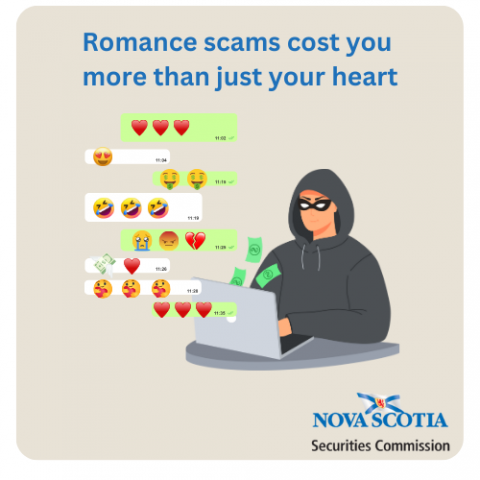
The most romantic day of the year arrives later this week, as Valentine’s Day is almost upon us. If you’re looking for love, and online is one of the places you’re looking, be cautious of romance scams that often involve investment opportunities that are after much more than your heart.
In a romance scam a fraudster will develop a virtual or online relationship with their victim. Fraudsters are pursuing their victims through email, social media channels, text messaging, messaging apps, and online dating sites and apps.
Once the relationship has been developed and some trust has been established, the fraudster will attempt to get some money from their love interest. The most common ways this money requests occurs include:
- Asking for money due to an emergency, which could be an accident, medical, or emergency travel for example,
- Investing in a business venture or some other can’t miss investment opportunity with them, or
- Investing in crypto assets, often touting their own recent investment gains.
They will often go to great lengths to convince their online partner that this financial request is legitimate. This could include phony medical, or accident reports along with accompanying photos, phony investment statements or investment information, or very convincing stories that play on other’s emotions. The advancements and increased access to AI has made it easier for fraudster to create fake evidence of their monetary need, especially the ability to create photos and videos that can appear to be very convincing.
If you are involved in an online relationship or have been approached by people online with romantic intentions, here are some red flags you can watch for that may indicate they are running a romance scam on you. Some are:
- The person wants to quickly move to a private or different mode of communication (email, text, Whatsapp, Telegram).
- They always have an excuse not to meet in person and never show their face on camera.
- They only provide photos or pre-recorded video of themselves that can easily be created or manipulated using AI.
- You receive poorly or oddly written messages, sometimes even addressing you by the wrong name.
- They act distressed or angry and try to guilt you into sending money.
- They discourage you from discussing them or their situation with your friends and family.
- They claim to live close to you but are working or traveling overseas.
There are ways to protect yourself when looking for love online. If you’re using an online dating site or app, or finding friends or romantic partners on other online platforms, here are a few things to remember and follow to protect yourself:
- If your online connection asks you for money, they are likely a scammer. Cut off contact right away and seek support.
- Don’t send money, financial details, or important identity documents like your passport to someone you’ve only met online, no matter how long you’ve been messaging them.
- Never agree to transfer money or purchase gift cards for someone else. It could be money laundering and being involved in it is a criminal offence.
- Never send intimate pictures or videos of yourself to people you don’t know. Scammers often use these to blackmail people.
- Don’t keep your online relationship a secret. Speak to people you know about it. It can be easier for others to spot the warning signs.
- Be careful about what you share about yourself online. Scammers can use information about your hobbies, job, or family to target you.